
Supporting Transitions and Big Feelings
Practical, positive strategies for helping a child move between activities without a meltdown.
Behavior is communication. When a transition breaks down, the child is usually telling us that something felt unpredictable, too fast, or too demanding.
Give warnings the child can perceive
A verbal two-minute warning helps some children and means nothing to others. A visual timer, a song that signals clean-up, or a card handed over can be far more concrete.
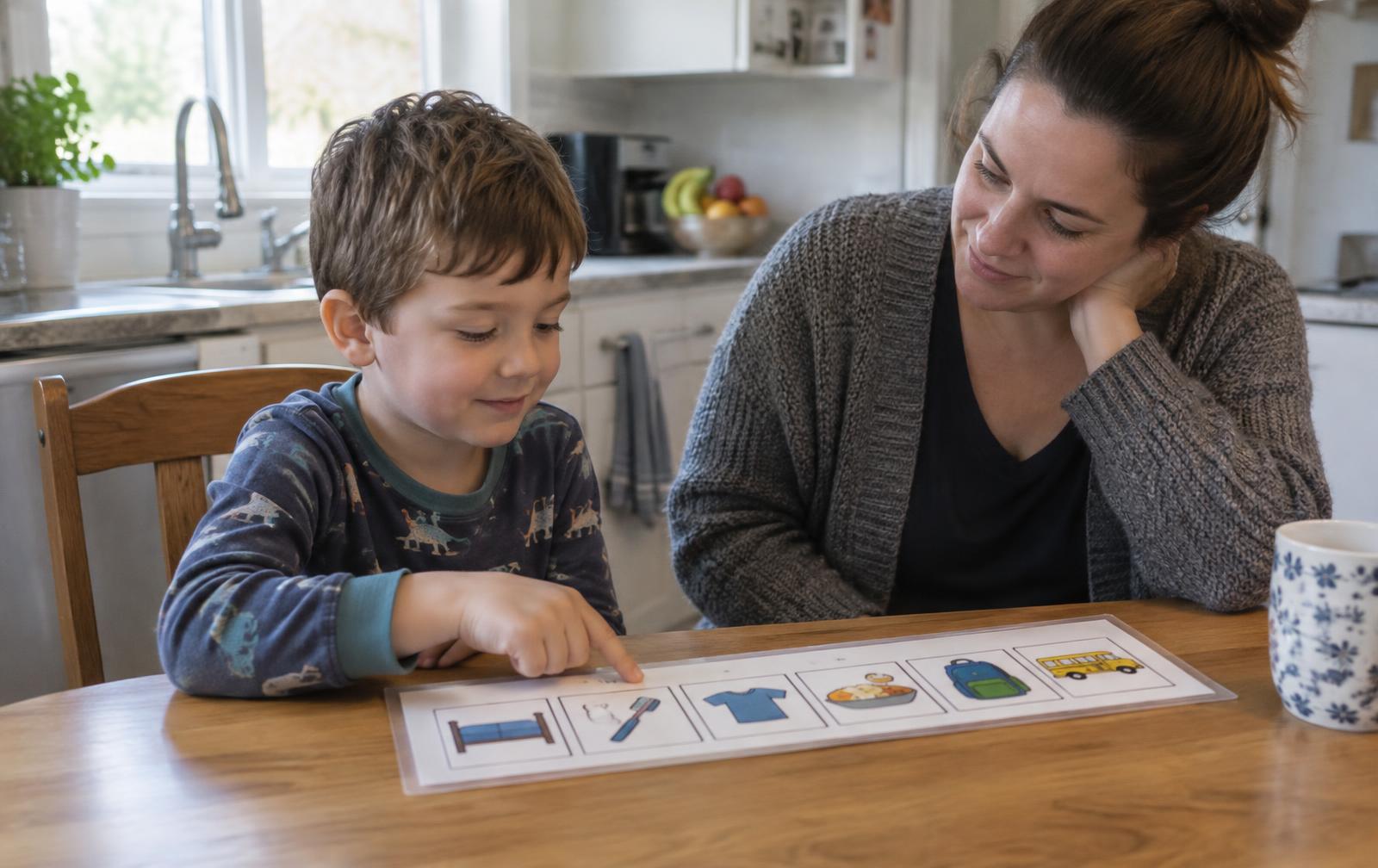
Make the next activity visible
Leaving a preferred activity is easier when the child can see what comes next. Show the picture, walk to the space together, or carry a transition object.
Teach regulation before the hard moment
Deep pressure, movement breaks, breathing routines, and a calm space work best when they are practiced during calm times, not introduced in the middle of distress.
Respond to the feeling first
Acknowledge what you see: you are upset that it is time to stop. Once a child feels understood, they can access the strategies you have taught them.
Track patterns, not incidents
Note the time, the setting, and what happened just before. Patterns reveal triggers, and triggers point to the changes that actually help.